
Basic Life Support Certification (BLS) Overview
Prepare to respond to cardiac and breathing emergencies through structured Basic Life Support training. This online BLS course covers adult, child and infant response, CPR techniques, ventilation equipment, AED use, choking procedures and coordinated team-based care. Review the training materials at your own pace, take the exam when you are ready and pay only after you pass. Your digital BLS certificate is available immediately after passing and payment.
Course at a Glance
- Format: 100% online and self-paced
- Curriculum: 17 BLS training chapters
- Topics: Adult, child and infant CPR, ventilations, AED use, choking response and team dynamics
- Study materials: Available before purchase
- Passing score: 80%
- Exam attempts: Unlimited at no additional cost
- Payment: Required only after passing
- Certificate: Available immediately after passing and payment
- Certification period: One year
- Devices: Phone, tablet or computer
- Account: Not required to study or take the exam
Most learners complete the exam in under one hour. Total completion time depends on previous experience and how thoroughly the course materials are reviewed.
What This BLS Certification Covers
Adult, Child and Infant CPR
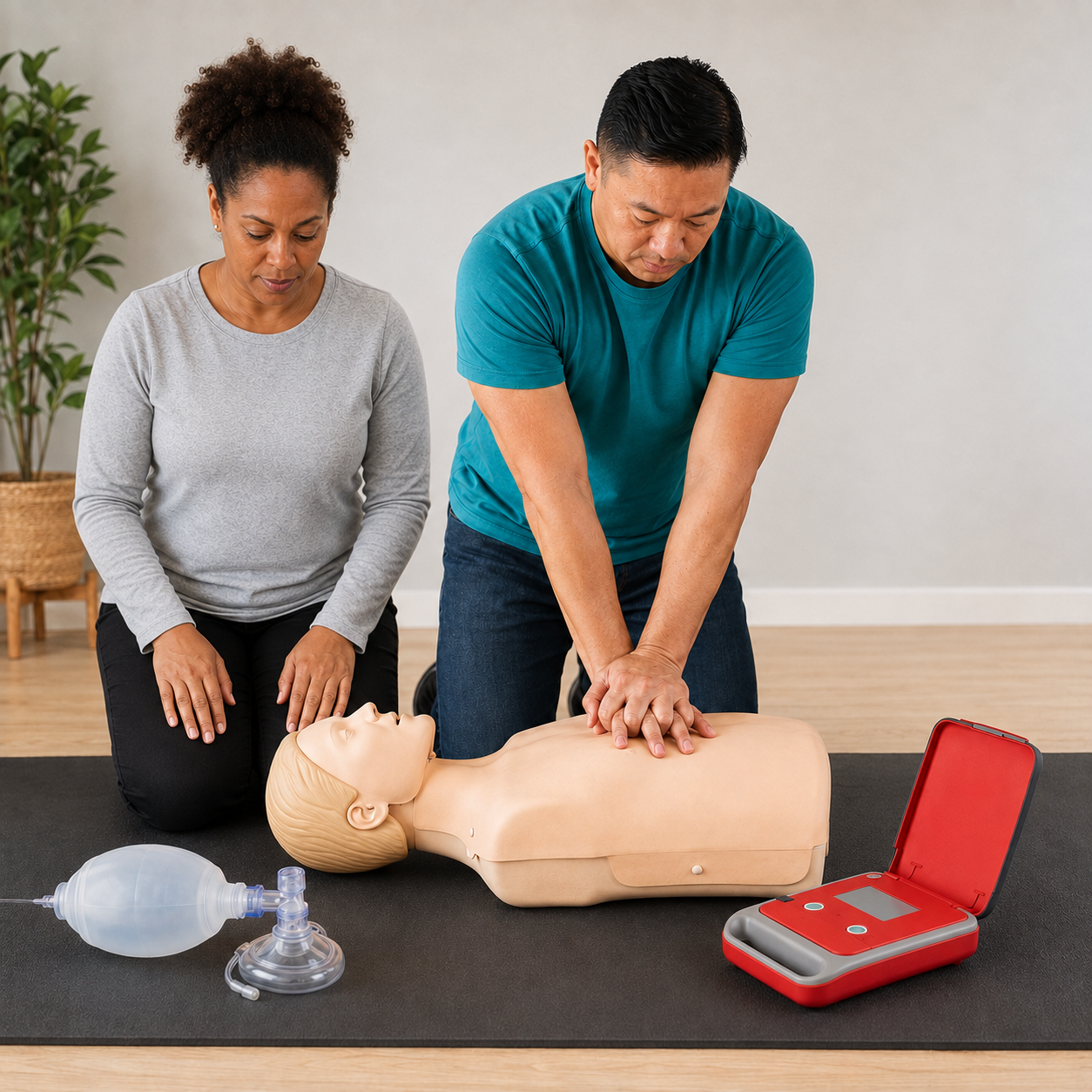
Review cardiac-arrest recognition, victim positioning, pulse checks and compression techniques for adults, children and infants.
Airway and Ventilation Support
Learn about ventilation equipment, rescue breathing and ventilation procedures for adults, children and infants.
AED Use
Review automated external defibrillator operation, proper pad placement and special circumstances that may affect AED use.
Choking Response
Study choking recognition and response procedures for conscious and unresponsive adults, children and infants.
Team-Based Emergency Response
Learn about team roles, communication and effective team dynamics during a coordinated emergency response.
Complete 17-Chapter BLS Course Curriculum
Review all 17 chapters covering adult, child and infant CPR, ventilation equipment, AED use, choking response and team-based emergency care.
View the Complete 17-Chapter BLS Course Curriculum
BLS Certification vs. CPR Certification
Both BLS and CPR training address cardiac emergencies, but BLS provides additional instruction intended for more structured response situations.
The BLS curriculum includes adult, child and infant response, ventilation equipment, multi-rescuer concepts, team roles and effective team dynamics. A standard CPR course generally focuses more directly on the essential actions an individual rescuer can take during a cardiac emergency.
The correct certification depends on the requirements established by your employer, school, licensing organization or professional governing body.
How It Works
- Select Start Course to access the online BLS training manual.
- Review the 17 course chapters at your own pace.
- Take the online certification exam when you are ready.
- Earn a score of 80% or higher.
- Retake the exam as needed at no additional cost.
- Pay only after you pass.
- Download your BLS certificate immediately after payment.
Exam and Certification Details
The online exam contains multiple-choice and true-or-false questions covering the material presented in the course. A minimum score of 80% is required to pass.
You may retake the exam as many times as necessary without paying an additional fee. No payment is required before you pass. After passing and completing payment, your digital certificate is immediately available for download.
BLS certification is valid for one year and can be renewed by completing the current certification process again. An optional digital wallet card may also be available.
Who Should Take This BLS Certification?
This online BLS certification may be useful for:
- Healthcare and clinical personnel
- Emergency-response personnel
- Dental and allied-health professionals
- Healthcare students
- Workplace safety personnel
- Caregivers
- Fitness and wellness professionals
- Individuals seeking team-based emergency-response education
BLS requirements vary significantly among employers, healthcare facilities, schools, licensing organizations and jurisdictions. Confirm that a fully online certification meets your specific requirements before purchasing.
Fully Accredited Online BLS Course
MyCPR NOW and its complete online course catalog have been reviewed and accredited by the International Council for Online Educational Standards (ICOES).
This independent accreditation confirms that the courses have been reviewed against established standards for online education. Accreditation provides an additional level of quality assurance, but it does not guarantee acceptance by every employer, healthcare facility, licensing organization or regulatory body.
Important BLS Certification Information
This is a fully online, knowledge-based BLS certification course. It does not include a live instructor, in-person skills demonstration or hands-on skills evaluation.
Some employers, healthcare facilities, educational programs and licensing organizations require training from a particular provider or a course that includes an in-person skills assessment. Confirm the exact requirements that apply to your position or program before purchasing.
Frequently Asked Questions
Is this BLS course fully accredited?
Yes. MyCPR NOW and its complete online course catalog have been reviewed and accredited by the International Council for Online Educational Standards.
How do I access the BLS course?
Select the Start Course button on this page. You can immediately access the 17-chapter BLS training manual without creating an account or making an upfront payment.
Is this BLS certification completed entirely online?
Yes. The course materials and certification exam are available entirely online and can be accessed from a phone, tablet or computer.
What is the difference between BLS and CPR certification?
BLS includes CPR but places additional emphasis on adult, child and infant response, ventilation equipment, coordinated team roles and effective team dynamics. Standard CPR certification generally focuses on the essential response actions performed by an individual rescuer.
Is this BLS certification accepted by healthcare employers?
Acceptance depends on the employer, healthcare facility, educational program, profession and jurisdiction. Some organizations accept online BLS certification, while others require a particular provider or an in-person skills assessment. Verify the applicable requirements before purchasing.
Does this BLS course include hands-on training?
No. This is a fully online, knowledge-based course and does not include a live instructor or hands-on skills evaluation.
Do I have to pay before taking the exam?
No. You can review the BLS training materials and take the exam before purchasing. Payment is required only after passing if you choose to obtain your certificate.
What score is required to pass?
A minimum score of 80% is required to pass the BLS certification exam.
What happens if I do not pass?
You may retake the exam as many times as needed at no additional cost. You will not be charged for an unsuccessful attempt.
When will I receive my BLS certificate?
Your digital certificate is available immediately after you pass the exam and complete payment.
How long is BLS certification valid?
The certification is valid for one year from its completion date. You can renew by completing the current certification process again.