

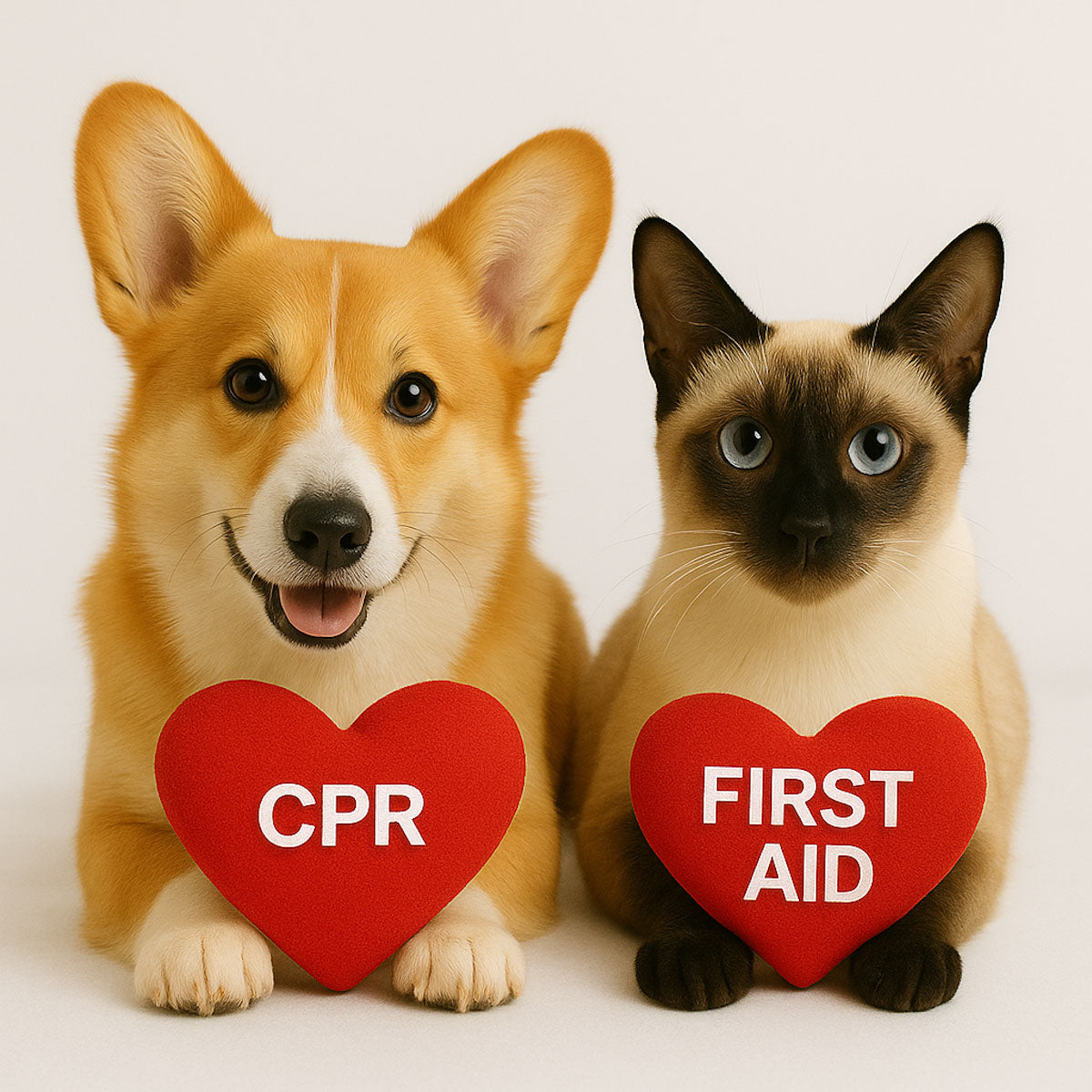
Pet CPR + First Aid Certification Overview
Build the knowledge needed to recognize and respond to emergencies involving dogs and cats while professional veterinary assistance is being arranged. This 11-chapter online Pet CPR and First Aid course covers general pet health, normal vital signs, wounds, bleeding, seizures, choking, cardiopulmonary resuscitation, aftercare and common mistakes.
Review the complete course before taking the exam, work at your own pace and pay only after you pass. After passing and completing payment, your digital Pet CPR + First Aid certificate is available to download immediately. MyCPR NOW has certified thousands of individuals throughout the United States and internationally.
Course at a Glance
- 11-chapter Pet CPR and First Aid course
- Emergency preparedness for dogs and cats
- General pet health
- Normal canine and feline vital signs
- Pet wounds
- External and internal bleeding
- Seizure recognition and response
- Choking response
- CPR for dogs and cats
- Aftercare and common mistakes
- 100% online and self-paced
- Course materials available before payment
- 80% passing score
- Unlimited exam retakes
- Payment required only after passing
- Instant digital certificate
- Certification valid for one year
What You Will Learn
General Pet Health
Review general health considerations for dogs and cats, including routine veterinary care, nutrition, hydration, exercise, grooming and breed-specific needs.
Normal Vital Signs
Learn about canine and feline breathing rates, pulse rates, temperature, capillary refill time, mucous-membrane appearance and signs associated with dehydration.
Pet Wounds
Review common pet wounds, including bites, cuts, scratches, scrapes and skin tears. Learn why the type and severity of a wound affect the appropriate response and need for veterinary care.
Bleeding in Dogs and Cats
Learn about external and internal bleeding and the differences among arterial, venous and capillary bleeding. Review general bleeding-control and wound-care considerations.
Pet Seizures
Learn to recognize signs associated with seizures in dogs and cats and review general safety, observation and documentation considerations while veterinary assistance is being arranged.
Choking Response for Pets
Learn how to recognize possible airway obstruction in dogs and cats and review the choking-response procedures presented in the course.
CPR for Dogs and Cats
Review pulse and breathing assessment, airway considerations, chest compressions and rescue breathing for dogs and cats.
Aftercare and Common Mistakes
Learn why veterinary evaluation may remain important after an emergency, even when a pet appears to have recovered. Review common pet first aid and CPR mistakes.
Emergency Preparedness for Dogs and Cats
Dogs and cats have different anatomy, normal vital signs and emergency-response needs than humans. Human CPR or First Aid certification does not provide the same animal-specific training as a Pet CPR and First Aid course.
This course is specifically designed around emergency recognition and response for dogs and cats. It does not qualify the certificate holder to diagnose an animal, prescribe treatment or provide professional veterinary services.
Professional and Workplace Use
Pet CPR + First Aid certification is commonly used by individuals who work with or care for animals.
The course may support staff training and emergency-preparedness programs for pet-care businesses, boarding facilities, grooming businesses, shelters and other animal-care organizations.
Professional and workplace requirements vary. Employers, organizations and licensing authorities may require additional hands-on training, workplace-specific procedures or certification from a designated provider.
Confirm the applicable requirements before purchasing if certification is needed for employment, licensing or professional credentialing.
Complete 11-Chapter Course Curriculum
Review the complete Pet CPR and First Aid training curriculum before taking the certification exam.
View the Complete 11-Chapter Pet CPR + First Aid Course Curriculum
How It Works
- Select Start Course to access the online training material.
- Review the 11 course chapters at your own pace.
- Take the online certification exam when you are ready.
- Score at least 80% to pass. Retake the exam without an additional charge if necessary.
- Pay only after you have passed.
- Download your digital Pet CPR + First Aid certificate immediately after payment.
No scheduled class, advance purchase or account is required to access the course material and exam.
Exam and Certification Details
The Pet CPR + First Aid certification exam contains multiple-choice and true-or-false questions based on the course material.
A minimum score of 80% is required to pass. You may retake the exam as many times as necessary without an additional charge, and payment is only required after passing.
After passing and completing payment, your digital certificate is available for immediate download. Certification is valid for one year and can be renewed by completing the certification process again.
Who Should Take This Certification?
Pet CPR + First Aid certification may be appropriate for:
- Dog and cat owners
- Pet sitters
- Dog walkers
- Pet groomers
- Dog trainers
- Boarding and daycare employees
- Animal-shelter personnel and volunteers
- Rescue-organization volunteers
- Pet-store employees
- Veterinary support personnel
- Animal-care professionals
- Individuals seeking pet emergency-preparedness knowledge
Certification and employment requirements vary. Confirm that an online Pet CPR and First Aid certification meets the requirements of your employer, licensing authority or organization.
Fully Accredited Online Course
MyCPR NOW is fully accredited by the International Council for Online Educational Standards (ICOES). ICOES has reviewed MyCPR NOW and its complete course catalog, including this Pet CPR + First Aid certification course.
Accreditation provides independent review of the educational provider and course content. It does not replace employer, licensing, workplace or professional requirements.
Important Certification Information
This is a 100% online, knowledge-based Pet CPR and First Aid certification course. It does not include an in-person skills demonstration or clinical veterinary training.
Pet first aid and CPR are intended to support an emergency response while professional veterinary assistance is being arranged. This course does not replace examination, diagnosis or treatment by a licensed veterinarian.
Frequently Asked Questions
Is this Pet CPR and First Aid course accredited?
Yes. MyCPR NOW and its complete course catalog are fully accredited by the International Council for Online Educational Standards.
Does the course cover both dogs and cats?
Yes. The course addresses emergency recognition and response considerations for both dogs and cats.
What does the course cover?
The 11-chapter course covers general pet health, normal vital signs, wounds, bleeding, seizures, choking, CPR, aftercare and common mistakes.
Does this certification replace veterinary care?
No. Pet CPR and First Aid may support an emergency response while veterinary assistance is being arranged. It does not replace professional veterinary examination, diagnosis or treatment.
Does the course include hands-on practice?
No. This is an online, knowledge-based certification course. Employers and professional organizations may require a separate hands-on skills demonstration.
Is pet CPR the same as human CPR?
No. Dogs and cats have different anatomy and emergency-response considerations. This course covers the pet-specific CPR procedures presented for dogs and cats.
Can this certification be used for a pet-sitting or animal-care business?
The course may support staff education and demonstrate completion of Pet CPR and First Aid training. Business, employer and licensing requirements vary and should be confirmed before purchasing.
Is this certification accepted by every employer?
Acceptance and training requirements vary by employer, organization, occupation and location. Confirm the applicable requirements before purchasing.
Is the course completed entirely online?
Yes. The course material and certification exam are available online and can be accessed from a computer, tablet or mobile device.
Can I review the course before paying?
Yes. You may access and review the complete course material before taking the exam or making a payment.
What score is required to pass?
A minimum score of 80% is required to pass the Pet CPR + First Aid certification exam.
Can I retake the exam?
Yes. You may retake the exam as many times as necessary without an additional charge.
When do I pay?
Payment is only required after you successfully pass the certification exam.
When will I receive my certificate?
Your digital Pet CPR + First Aid certificate is available to download immediately after you pass and complete payment.
How long is the certification valid?
The certificate is valid for one year from its completion date.
Is the course suitable for beginners?
Yes. The course is organized in a structured format suitable for pet owners, animal-care professionals and first-time learners.
Is an account required to begin?
No. You can access the course material and certification exam without creating an account.