

CPR/AED Certification
CPR/AED Certification
Be Ready When It Matters Most
Earn your CPR/AED certification through a fully accredited, 100% online course covering adult, child and infant CPR, ventilation techniques, AED use and response to cardiac arrest.
Pay Only If You Pass
Fully Accredited
100% Online & Self-Paced
Instant Certificate After Passing
Couldn't load pickup availability
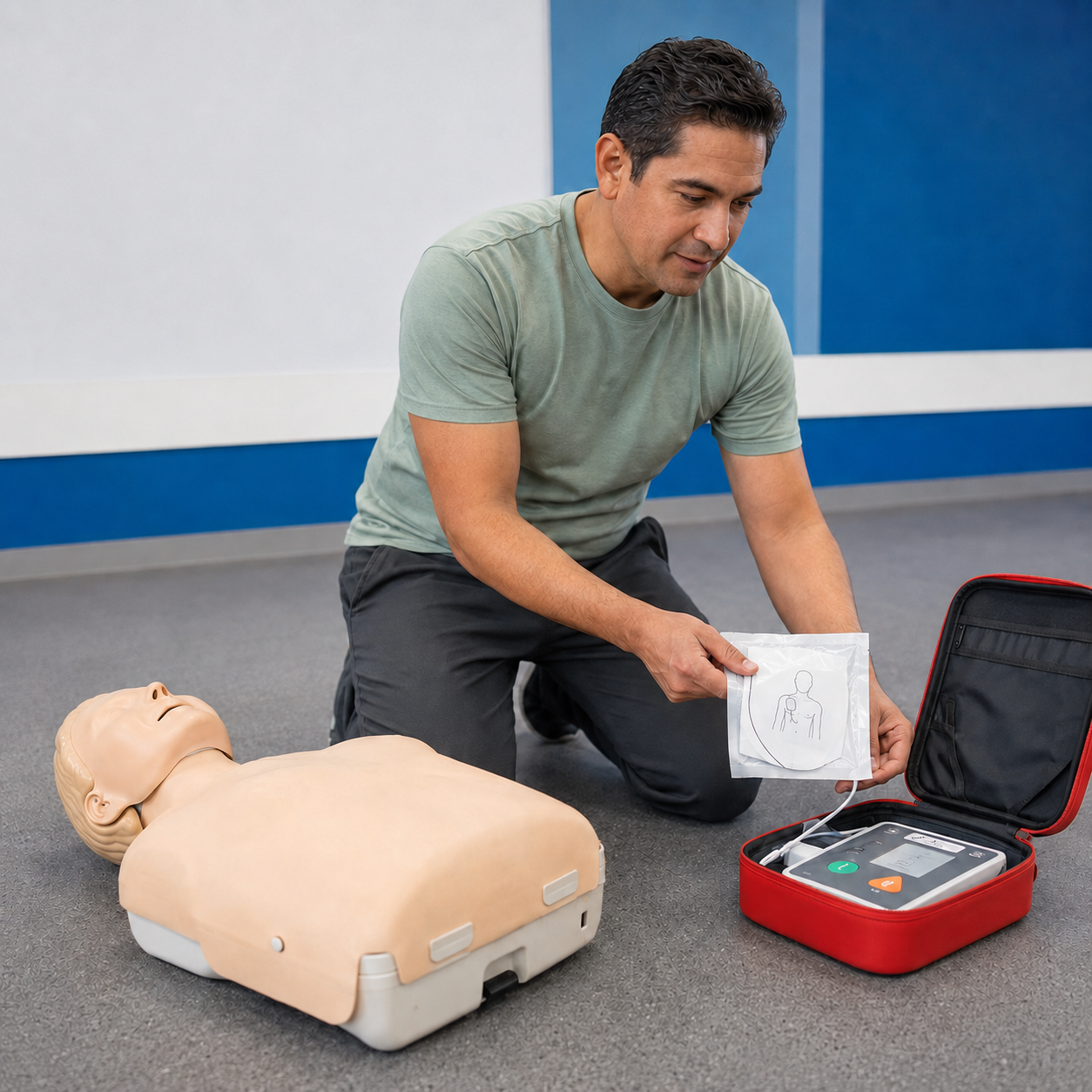
CPR/AED Certification Overview
Study the complete course material before taking the exam, work at your own pace and pay only after you pass. Once you have passed and completed payment, your digital CPR/AED certificate is available to download immediately. MyCPR NOW has certified thousands of individuals throughout the United States and internationally.
Course at a Glance
- 12-chapter CPR and AED course
- Adult, child and infant CPR instruction
- Cardiac-arrest recognition and initial response
- Chest-compression and ventilation techniques
- AED operation and special circumstances
- 100% online and self-paced
- Course materials available before payment
- 80% passing score
- Unlimited exam retakes
- Payment required only after passing
- Instant digital certificate
- Certification valid for one year
What You Will Learn
Recognizing Cardiac Arrest
Learn how to recognize the signs of cardiac arrest, assess the situation and understand the importance of activating emergency medical services promptly.
Adult CPR
Review proper positioning, pulse checks, chest-compression techniques and ventilation procedures for adults experiencing cardiac arrest.
Child and Infant CPR
Learn how CPR techniques differ for children and infants, including age-appropriate compressions, positioning and ventilation methods.
Ventilation Equipment and Techniques
Understand commonly used ventilation equipment and how ventilations are performed for adult, child and infant patients.
AED Use
Learn the purpose of an automated external defibrillator, the basic steps involved in AED operation and how to respond to special circumstances.
Common CPR Mistakes
Review frequent CPR errors and the steps that can help improve the consistency and effectiveness of an emergency response.
CPR/AED Certification vs. BLS Certification
CPR/AED certification provides foundational training for individuals seeking essential cardiac-emergency knowledge for the workplace, coaching, education, childcare or personal preparedness.
Basic Life Support certification generally includes additional material intended for healthcare professionals and professional rescuers, including coordinated team response. If your employer or licensing organization specifically requires BLS certification, choose the Basic Life Support Certification course.
Always confirm the exact certification required by your employer, licensing authority or governing organization before purchasing.
Complete 12-Chapter Course Curriculum
Review the complete adult, child and infant CPR and AED training curriculum before taking the certification exam.
View the Complete 12-Chapter CPR/AED Course Curriculum
How It Works
- Select Start Course to access the online training material.
- Review the 12 course chapters at your own pace.
- Take the online certification exam when you are ready.
- Score at least 80% to pass. If necessary, retake the exam at no additional cost.
- Pay only after you have passed.
- Download your digital CPR/AED certificate immediately after payment.
No scheduled classes or advance purchase are required.
Exam and Certification Details
The online CPR/AED exam includes multiple-choice and true-or-false questions based on the course material.
A minimum score of 80% is required to pass. You may retake the exam as many times as necessary without paying an additional fee. Payment is only required after you pass.
Your digital certificate becomes available for immediate download after you successfully complete the exam and payment. Certification is valid for one year and can be renewed by completing the certification process again.
Who Should Take This Certification?
This CPR/AED certification may be appropriate for:
- Workplace employees
- Teachers and school personnel
- Coaches and fitness professionals
- Childcare providers
- Parents and caregivers
- Community volunteers
- Individuals seeking general emergency preparedness
- Anyone wanting foundational CPR and AED knowledge
Certification requirements vary. Confirm that an online CPR/AED certification meets the requirements of your employer, licensing authority or organization.
Fully Accredited Online Course
MyCPR NOW is fully accredited by the International Council for Online Educational Standards (ICOES). ICOES has reviewed MyCPR NOW and its complete course catalog, including this CPR/AED certification course.
Accreditation provides independent review of the educational provider and course content. It does not replace employer, licensing or regulatory requirements, which may differ by profession and location.
Important Certification Information
This is a 100% online, knowledge-based CPR/AED certification course. It does not include an in-person skills demonstration.
Some employers, healthcare organizations, licensing authorities or regulatory bodies require hands-on training or certification from a designated provider. Verify the applicable requirements before purchasing if you need certification for employment, licensing or regulatory compliance.
Frequently Asked Questions
Is this CPR/AED course accredited?
Yes. MyCPR NOW and its complete course catalog are fully accredited by the International Council for Online Educational Standards.
Is the CPR/AED certification completed entirely online?
Yes. The course material and certification exam are available online and can be accessed from a computer, tablet or mobile device.
What does the CPR/AED course cover?
The 12-chapter course covers cardiac-arrest recognition, positioning and pulse checks, adult CPR, child and infant CPR, ventilation equipment, ventilation techniques, AED use, special AED circumstances and common CPR mistakes.
Can I review the course before paying?
Yes. You may access and review the online course material before taking the exam or making a payment.
What score is required to pass?
You must earn a score of at least 80% to pass the CPR/AED certification exam.
Can I retake the exam?
Yes. You may retake the exam as many times as necessary at no additional cost.
When do I pay?
You pay only after successfully passing the certification exam.
When will I receive my certificate?
Your digital CPR/AED certificate is available to download immediately after you pass the exam and complete payment.
How long is the CPR/AED certification valid?
The certification is valid for one year from its completion date.
Is this certification accepted by every employer?
Acceptance depends on the employer, licensing authority, organization and location. Confirm the applicable requirements before purchasing if certification is needed for a specific purpose.
Does this course include hands-on CPR practice?
No. This is an online, knowledge-based certification. Some employers and regulatory organizations require an in-person skills demonstration.
What is the difference between CPR/AED and BLS certification?
CPR/AED certification covers foundational cardiac-emergency response for adults, children and infants. BLS typically includes additional professional-rescuer and coordinated-team concepts and may be required for certain healthcare positions.
Is this course suitable for beginners?
Yes. The chapters are presented in a structured, step-by-step format suitable for first-time learners and individuals renewing their CPR knowledge.
Stay in the Know
Stay current and up-to-date. Keep your finger on the pulse.