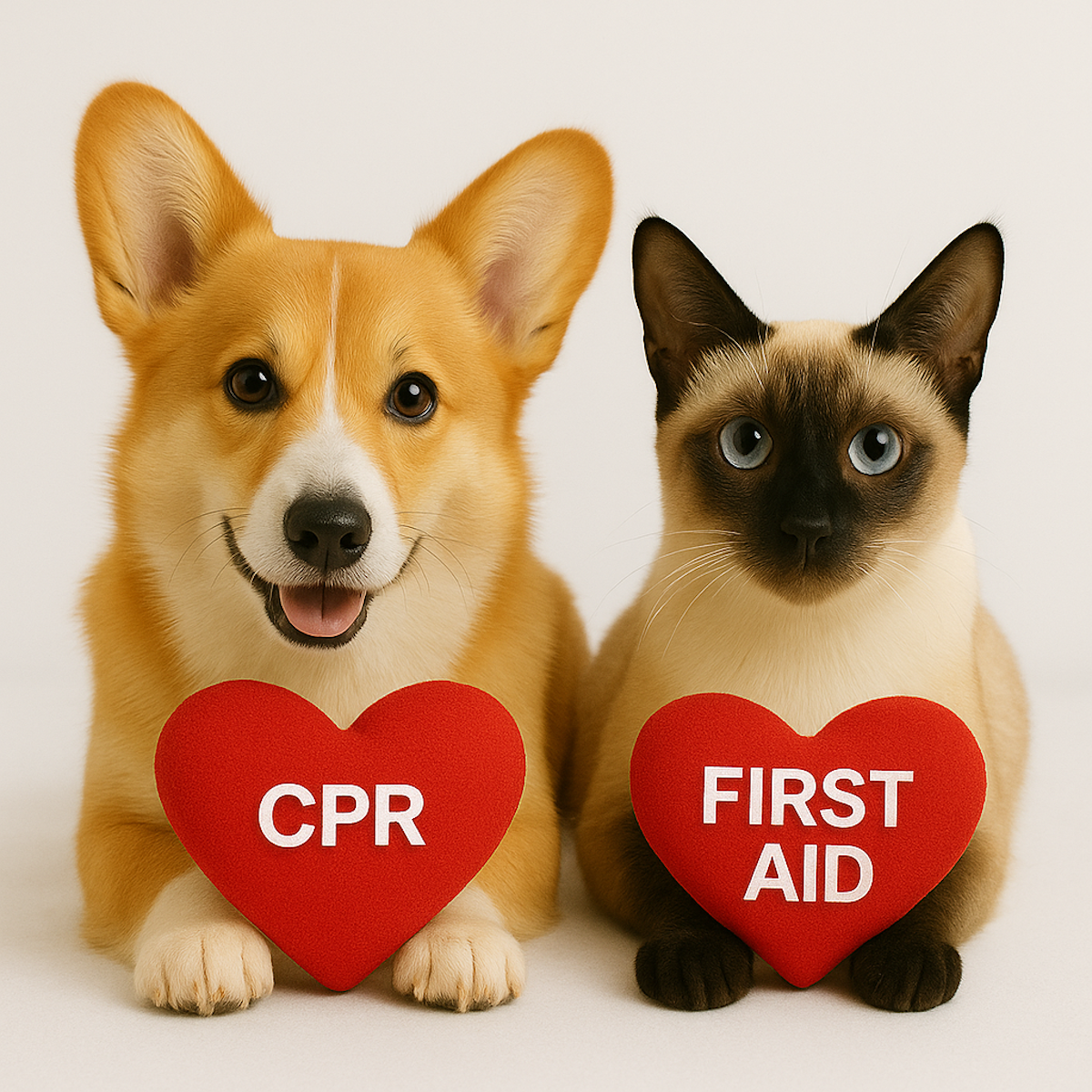

Pet CPR Training Classes: What to Look For
The practical value of Pet CPR Training Classes: What to Look For lies in the decisions surrounding the skill. A useful pet CPR class teaches more than compression mechanics. It should help owners recognize when CPR is appropriate, contact veterinary help, adapt technique to body shape and prepare for safe transport.
Course descriptions can sound similar, so compare learning objectives, pet-specific instruction, structured instruction models, assessment and the safety boundaries around poisoning, choking and injuries. Clear roles and observable facts are more dependable than confidence alone.
Protect people and activate veterinary care
Check the environment, approach carefully, call an emergency veterinarian, observe responsiveness and breathing and provide only the pet CPR or first-aid actions you have been trained to perform. Prepare safe transport and a concise history.
Do not give human medicines, force food or water, place your face near the animal’s mouth, perform invasive treatment, slowdown veterinary care or use restraint that worsens breathing or injury.
Review the recognition lesson
Technique is unsafe when used on a responsive or normally breathing animal. The distinction matters because a responder works from observable facts, not a private diagnosis.
Look for a clear assessment sequence. Keep the next step plain enough that another bystander can repeat it back. That protects the urgent priority while emergency support is being activated.
Check species and size coverage
Dogs and cats do not share one body position. In a stressful incident area, this is where a small decision can either preserve momentum or create a distracting avoidable pause.
Choose instruction relevant to the animals in your care. State the next step aloud, assign it to one person and confirm that it happened. A useful response is controlled and visible rather than dramatic.
Look for scenario work options
Reading cannot verify pressure, seal or positioning. This principle becomes easier to remember when it is connected to a specific cue.
Use models or structured demonstration when available. Describe what you can see, hear or verify without guessing at the cause. Then use current structured instruction and live instructions to decide what comes next.
A confident answer meets a messy incident area
A learner can describe the topic perfectly in class, then pauses when noise and an uncertain nearby person assisting are added. A second run uses one information exchange lead and a visible sequence.
Knowledge becomes usable when it survives ordinary distractions.
pet emergency decision guide
Use this comparison to connect an observable cue with a safe next step and a clear boundary.
| What you notice | Why it changes the response | What to do next |
|---|---|---|
| Review the recognition lesson | Technique is unsafe when used on a responsive or normally breathing animal. | Look for a clear assessment sequence. |
| Check species and size coverage | Dogs and cats do not share one body position. | Choose instruction relevant to the animals in your care. |
| Look for skill review options | Reading cannot verify pressure, seal or positioning. | Use models or structured demonstration when available. |
| Evaluate emergency planning | CPR is only a bridge to veterinary care. | Confirm that calling and transport are included. |
| Connect knowledge to physical practice | Reading can explain a sequence but cannot verify timing, positioning or equipment use. | Use appropriate skills education devices and objective feedback within a structured course. |
Evaluate emergency planning
CPR is only a bridge to veterinary care. The safest boundary is the point at which basic first aid stops and professional assessment begins.
Confirm that calling and transport are included. Do not let a familiar-looking symptom create false reassurance. When the pattern is severe, changing or uncertain, early escalation is the practical choice.
Connect knowledge to physical scenario work
Reading can explain a sequence but cannot verify timing, positioning or response gear use. Preparation reduces the number of decisions that must be invented during the emergency.
Use appropriate course practice devices and objective feedback within a structured course. Emergency tools, roles and communication should support the skill rather than compete with it. Afterward, document any gap that should be corrected before the next event.
Refresh the skill deliberately
Memory and confidence can fade when a skill is never retrieved under realistic conditions. The distinction matters because a nearby response partner works from observable facts, not a private diagnosis.
Schedule short reviews and scenario skill review instead of waiting for an emergency. Keep the next step plain enough that another nearby supporting bystander can repeat it back. That protects the urgent priority while emergency support is being activated.
Three decision traps worth avoiding
Fast care is not the same as rushed care. A useful response protects the first life-saving priority while avoiding actions that add injury, slowdown or confusion. Review these traps during rehearsal so the correction is available before stress narrows attention.
Evaluate emergency planning
A common shortcut is to act on a familiar label before checking whether the incident area actually matches it. CPR is only a bridge to veterinary care. The safer correction is specific: Confirm that calling and transport are included. Confirm the action aloud and keep watching for a change that requires 911, CPR or another trained response.
Connect knowledge to physical scenario work
Another trap is allowing the search for emergency tools or certainty to replace the priority already in front of the responder. Reading can explain a sequence but cannot verify timing, positioning or equipment use. The safer correction is specific: Use appropriate course practice devices and objective feedback within a structured course. Confirm the next step aloud and keep watching for a change that requires 911, CPR or another trained response.
Refresh the skill deliberately
Teams also lose time when several people start the same task while no one owns the emergency call or briefing for the next team. Memory and confidence can fade when a skill is never retrieved under realistic conditions. The safer correction is specific: Schedule short reviews and scenario scenario work instead of waiting for an emergency. Confirm the chosen step aloud and keep watching for a change that requires 911, CPR or another trained response.
Rehearse the decision, not the drama
A short tabletop exercise can expose confusion without asking anyone to act out an injury. Use a manikin or structured instruction device when physical skill practice is appropriate. Never rehearse an emergency maneuver on an unsuspecting person, and stop any exercise that becomes unsafe.
- Review the recognition lesson: Name the observable cue, the first action and the person responsible for calling 911.
- Check species and size coverage: Remove one helper from the scenario and decide which priority must still be protected.
- Look for practice options: Add noise or limited space, then scenario work giving one clear instruction at a time.
- Evaluate emergency planning: Identify the exact moment when first aid reaches its limit and professional guidance is needed.
- Connect knowledge to physical skill review: Finish with the location, the person’s condition, actions taken and any meaningful change.
Run the incident area once with the supplies and people normally available. On the second pass, change one condition: the phone cannot connect immediately, the usual kit is missing, the space is crowded or the person cannot answer questions. The purpose is not to invent advanced treatment. It is to preserve incident area safety, emergency activation, the highest-priority first-aid action and a clear briefing for the next team.
Debrief with evidence instead of impressions. Ask what was noticed first, how long it took to assign the emergency call, which words caused confusion and whether anyone crossed a training boundary. Record one correction, give it an owner and repeat the drill after the correction is made. That is how a reading exercise becomes a practical readiness improvement.
A practical pet emergency checklist
Use this list for preparation and review. During a real emergency, follow 911 instructions and current structured instruction.
- Look for a clear assessment sequence.
- Choose instruction relevant to the animals in your care.
- Use models or structured demonstration when available.
- Confirm that calling and transport are included.
- Use appropriate skills education devices and objective feedback within a structured course.
- Schedule short reviews and scenario scenario work instead of waiting for an emergency.
- Confirm that contact information, supplies and roles are current.
- Record one gap and assign the correction before the next rehearsal session.
Questions readers often ask
Can human CPR steps be copied directly to a dog?
No. Position, compression method and ventilation vary with species and body shape; use pet-specific structured instruction and veterinary direction.
Should a pet be muzzled during breathing trouble?
No. A muzzle can worsen respiratory distress and may be unsafe with vomiting, facial injury or reduced responsiveness.
Can human first-aid technique be copied directly to an animal?
No. Body shape, behavior and injury risks differ. Use species-appropriate skills education and contact an emergency veterinarian.
What if the animal may bite?
Protect people first. Avoid restraint that increases danger and follow animal-control, veterinary and 911 guidance as appropriate.
Where this guidance becomes practical
Pet CPR Training Classes: What to Look For becomes valuable when the information holds up in a noisy room, a crowded field, a moving workplace or a worried household.
Use a tabletop exercise with the normal people, supplies and access route. Add one realistic obstacle, such as a locked door, poor phone coverage or a person who cannot answer questions. CPR is only a bridge to veterinary care. The corrective action is straightforward: Confirm that calling and transport are included. Repeat the scenario only after the obstacle has an owner and a practical correction.
Continue building related skills
Read safe boundaries for cold and warmth in pet first aid and how pet CPR course practice supports emergency readiness. Both pages are active parts of the MyCPR NOW learning library and reinforce the decisions around this topic.
Authoritative sources and further reading
- Food and Drug Administration pet-emergency contact guidance
- Food and Drug Administration pet preparedness guidance
- federal pet emergency-planning guidance
Pet emergency readiness combines species-appropriate skills with safe handling and rapid veterinary access. First aid supports the trip to care; it does not replace it. In pet cpr structured instruction classes: what to look for, the practical goal is not perfect certainty; it is a safe next decision that preserves time, dignity and access to professional care.
Explore structured instruction with MyCPR NOW Pet CPR and First Aid Certification.